
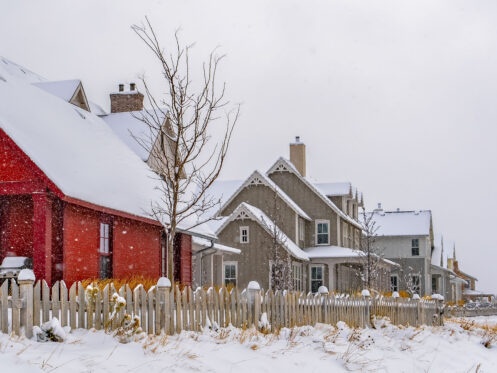
There’s no doubt that winter can be one of the most challenging seasons for your home as a whole. When you think about your protection from the elements, your roof is actually your first line of defense. While you may be focused on keeping your heating system operating efficiently, you definitely don’t want to overlook how the fluctuating winter temperatures can impact your home’s roofing materials. Knowing this allows you to take preventive measures to extend the lifespan of your roof and better protect your home.
Understanding Freeze-Thaw Cycles
One of the biggest ways that winter can affect your roof is through freeze-thaw cycles. This cycle happens when the temperature fluctuates from above freezing to below freezing and back again. This happens most commonly during the daytime when the warm sunlight heats up your roof and causes any snow or ice on it to melt.
Then, when the temperatures drop sharply at night, the water on your roof refreezes. This constant freezing and melting can have damaging effects on your roof. When it comes to asphalt shingles, the freeze-thaw cycles can lead to granule loss, cracking, and even curling. Unfortunately, anywhere that there’s damage to your shingles, water can seep down and freeze. As water freezes, it expands in size and makes the issue even larger.
Metal roofs are also susceptible to freeze-thaw cycles. The constant expansion and contraction of the metal due to the temperature swings can cause the fasteners to loosen and gaps to open up in your seams. This can potentially allow water to infiltrate between the seams and create leaks in your home.
Reduced Shingle Adhesion
All modern asphalt shingles are specifically designed with an adhesive strip on their backside. This allows them to effectively seal down to the roof decking. When the weather outside is cold for an extended period, the adhesive strip can become brittle. This can cause the adhesive to break down and reduce its effectiveness.
When your shingles aren’t properly adhered, they’re more susceptible to lifting during windy conditions. This can allow wind-driven rain and ice to penetrate underneath your shingles and make them more prone to damage.
Underlayment and Decking Stress
Underneath your asphalt shingles is an underlayment material that serves as a secondary water barrier. With repeated freezing and thawing of water on your roof, the underlayment becomes more brittle and can deteriorate. This will reduce its overall water resistance and can lead to unwanted water infiltration into the decking layer beneath.
Your roof decking can experience stress during colder temperature fluctuations. The wood decking will expand when it absorbs moisture from melting snow or ice and contract as it dries out. This constant shifting can create small gaps in your decking that can compromise the integrity of your entire roofing structure over time.
Sealant Degradation and Flashing Issues
All roofs have metal flashing around protrusions like vents, skylights, chimneys, and along the edge of the roof. These are critical components for preventing unwanted water infiltration. Unfortunately, temperature swings throughout the winter months can cause unwanted expansion and contraction of the metal flashing. This can cause their seals to loosen over time and allow water to leak into your home.
Furthermore, sealants and caulking used around these roofing protrusions can also break down over time. Repeated freezing and thawing make these sealants and caulking more susceptible to cracking. When they do, water can seep into these more vulnerable areas and accelerate roof deterioration.
Attic Vents and Roof Insulation
The insulation and ventilation in your attic play significant roles in the efficiency of your home throughout the winter. If you have inadequate insulation, the heat that your HVAC system produces can escape through the roof of your home. This can allow snow to melt unevenly, forming ice dams on your roof.
Furthermore, poor attic ventilation prevents cold air from circulating properly throughout your attic space. This can contribute to uneven roof temperatures. When heat escapes from your attic, it can prematurely deteriorate your roofing materials and shorten their lifespan.
Increased Load of Snow and Ice
Another way that winter weather and fluctuating temperatures can affect your roof is through snow and ice loads. The natural weight of both snow and ice can put excessive strain on your roofing structure. Wet snow is particularly heavy, causing an intense load on your roof. If your roof isn’t designed to handle repeated cycles of snow accumulation, it can experience signs of stress, including cracked shingles, sagging, and other severe structural issues.
Gutter and Downspout Problems
Your gutters and downspouts play an important role in diverting water and snowmelt away from your home’s foundation. When temperature swings and the freeze-thaw cycles kick in, ice can form inside your gutters. This can obstruct the flow of snowmelt out of your gutters, allowing water to back up underneath your shingles and down your fascia and soffit boards. Additionally, when water freezes inside your gutter, it expands in size. This can cause your gutter to pull away from your fascia or, in some cases, bend or completely break off.
Preventative Measures
Now that you know how temperature fluctuations during the winter months can affect your roof, it’s important to take proactive measures to prevent these issues. Since you can’t control the weather, it’s important to focus on the things that you can. Start with getting an annual roof inspection in the fall before the winter season settles in.
This will identify weak spots in your roof so that you can repair them before they get worse. For example, roofers may reseal your flashing to ensure a proper watertight seal during the winter season. By fixing these issues now, you can greatly reduce your risk of experiencing a major malfunction during the winter.
If you have an aging roof, it’s best to upgrade it before winter hits. Issues like cracked, curling, and missing shingles can lead to water infiltration during snowmelt. This can damage your roof decking and the structural integrity of your roof. Instead of paying for a massive repair bill later, it’s typically best to replace your roof beforehand.
Fall is the perfect time to get your gutters cleaned and ensure that your downspouts are free from debris buildup. Check to ensure that all attic vents are fully open to allow cold air to circulate. Additionally, check your insulation to ensure none of it is missing so you can better control the temperature in your attic.
Signs of Winter Damage
While you can take all the preventative measures that we went over above, there’s always a risk of experiencing a problem with your roof during the wintertime. It’s best to understand the key signs of a roofing malfunction so that you can get repair service sooner rather than later. Some of the most common indicators of a problem include damaged flashing, missing shingles, ice damming, water stains on your ceiling, and even a sagging roofline. It’s best to call us as soon as you notice these issues to prevent further damage from happening to your home.
Reliable Roofing Repair Service
Jimmy's Roofing offers reliable roofing repair service in Seattle, WA. We can also help with all your new roof installation, roof replacement, and roof inspection needs. Call our office today to schedule an appointment with one of our helpful roofing professionals.




 #thejimmysWAY