
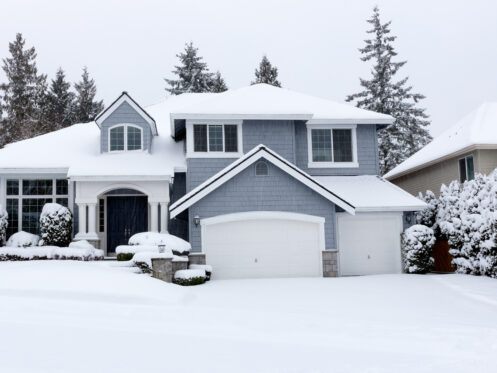
Ice along the roofline seems harmless, but it can hide trapped water. This water can soak shingles and cause leaks that appear long after a storm. Ice dams form when warm attic air melts snow, then refreezes at the roof edge.
How Ice Builds up on Your Roof
Ice along the edge of a roof usually starts with uneven heat, not because of the cold weather. Warm air from your home sneaks into the attic. It finds gaps around lights, hatches, and chases. That warmth keeps the roof above freezing, but the air near the gutters stays colder. Snow on the warm section begins to melt, and water flows down the shingles. Once that water hits the cold edge near the eaves, it freezes into a ridge. More meltwater flows in behind the ridge. Now, you have a small dam with liquid water trapped above the ice.
That trapped water looks like snow from the yard, yet it can move up under shingles and reach nail holes or seams. The result may be stains on ceilings, damp insulation, and damaged paint. You might also see heavy icicles hanging from the gutters. Those icicles mean a lot of water is freezing at the roof edge. It should flow through the gutter system instead.
Why DIY Ice Removal Puts You and Your Roof at Risk
Once you notice heavy ice, it is natural to think about climbing up with a shovel or hammer. That urge is understandable, and it is also the cause of many winter accidents. A roof covered with snow hides slick patches, vents, and skylights. Shingles under the snow can hold a thin glaze of ice that offers almost no grip. Ladders set in snow or on frozen pavement shift easily, and a small slip can lead to a long fall.
Tools for ice can create problems. Metal shovels and axes damage shingles by cutting through granules and protective layers. This can shorten the roof’s lifespan. Chunks of ice can break loose all at once and fall onto decks, railings, or people standing below. Even roof rakes used from a ladder raise the chance of falls and damaged gutters. Many safety groups and roofing companies say homeowners should stay on the ground. They recommend leaving roof work to trained roofers. These professionals come with protective gear, the right tools, and a solid plan.
Attic Insulation and Ventilation to Reduce Ice Buildup
Long-term control of roof ice starts inside the house. When the attic is closer to outdoor temperatures, the roof surface stays even. This helps snow melt slowly and uniformly. That means less water racing toward the cold edge. An insulation contractor can check your attic. They will determine what they need to winterize. Seal gaps around recessed lights, attic hatches, plumbing stacks, and wiring holes. This helps keep warm indoor air from entering the attic.
Once an insulation contractor seals those openings, insulation can do its job. Adding the right amount across the attic floor helps keep more heat in the rooms below and less in the attic. Intake vents at the eaves and outlet vents at the ridge let cold, dry air flow through the space. This steady movement keeps the roof decking close to outdoor conditions. This helps reduce warm spots that can lead to ice dams. This work needs a qualified contractor.
Gutters, Downspouts, and Where Meltwater Goes
Gutter systems don’t cause ice dams on their own, yet they can make edges worse when they fill with leaves and debris. When clogged gutters occur, meltwater has fewer ways to leave the roof edge. Water pools, freezes, and adds weight to the very section that already carries ice buildup. In some cases, the frozen gutter pulls away from the fascia or twists the hangers. That movement opens gaps where water can slip behind the trim.
Cleaning in the fall and early winter helps meltwater flow better away from the house. Downspouts draining near the foundation can cause icy spots. This happens on walks and driveways when temperatures drop. Extensions and splash blocks direct water away from the building. This helps prevent refreezing near steps or doorways.
A roofer can check the gutter slope and the number of downspouts. We will check the hangers to ensure proper drainage. Small tweaks in these areas help the system move water during a thaw instead of letting it pool at the roofline.
When Ice Buildup Becomes an Urgent Problem
Some signs tell you that roof ice has moved from a nuisance to a higher risk that needs fast attention. Water stains that spread quickly can be an early warning sign. If you see water dripping down an outside wall, that’s a red flag. Peeling paint on a windowsill also tells you water has made its way indoors. Doors on upper floors that stick after heavy snow may show structural stress. This stress comes from the added weight on the framing. Icicles hanging in thick clusters above main entrances can hurt people walking below.
If you spot any of these problems, call a roofing or insulation expert right away. Tell them what you observed. Share photos of the roofline, the icicles, and any interior damage. A clear description helps the team pick ladders, harnesses, and gear before arrival. While you wait, keep people and pets away from areas where snow and ice might fall. Do not chip at the ice from below or try to knock icicles down with tools. Focus on home safety, and let trained crews handle work at height.
Planning Long-Term Changes Before Next Winter
Once the season calms down, you have an opportunity to think about the next round of cold weather. Roof ice often repeats in the same spots, which means the house is giving you useful information. Rooms with heavy icicles might have poor attic insulation. They may also have big air leaks from recessed lights or open chases. Short gutter runs that overflow during every thaw might be too small for the roof area they serve. A roofing contractor or energy specialist can walk the property with you. They will mark these patterns.
From there, you can plan repairs in stages. One year might focus on attic air sealing and insulation. Another year might address new intake vents, improved ridge venting, or gutter upgrades. In some homes, small changes can make a big difference. For example, sealing air around a chimney or moving insulation back from a soffit can help. These adjustments can shift the roof surface and reduce ice buildup.
Keep Roof Ice Under Control All Winter
To stop heavy ice on your roof, start with the basics. You need good attic ventilation, clean gutters, and expert help when snow and ice pile up. Our roofing team in Portland, OR, can manage inspections, repairs, and safe ice dam removal. We can also offer advice on ventilation or insulation upgrades. For fewer roof surprises, schedule gutter and roof services with Jimmy's Roofing today.











 #thejimmysWAY