
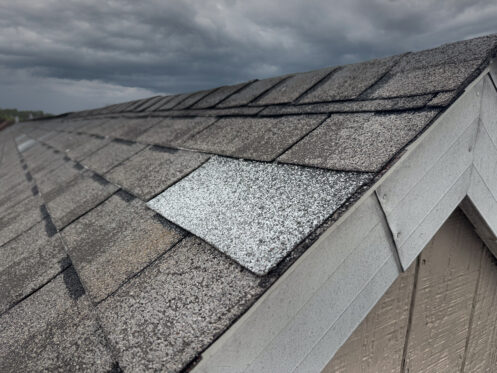
Your home’s asphalt shingle roof doesn’t usually fail all at once. Its end of service life is often gradual, with subtle changes that are easy to overlook. The first sign is often a water stain on the ceiling, but by then, the underlying damage may already be extensive. Other signs include surface wear, granule loss, or curling edges, which are not obvious from the ground. Recognizing the early warning signs of aging shingles is key to protecting your home and belongings.
Why Aging Shingles Are Easy to Miss
The signs of shingle deterioration are often missed because they develop so slowly. A slight lift at the corner is nearly impossible to spot without a close look. Unless a shingle is completely missing or there’s an active leak, the roof often remains out of sight and out of mind. A professional perspective is needed to distinguish normal aging from accelerated decay that signals impending failure.
Early Signs Your Shingles Are Wearing Out
If you know what to look for, your roof will tell you when it’s nearing the end of its lifespan. These indicators often appear long before a serious leak develops. One or two of these issues might warrant a simple shingle roof repair, but widespread problems might require a roof replacement.
- Granule loss and bald spots
- Curling, cracking, or clawing shingles
- Dark streaks or algae growth
- Brittle or easily broken shingles
- Lifted or loose shingle tabs
- Completely missing shingles
- Exposed or popped nail heads
Granule Loss and Bald Spots
The gritty, sand-like granules on your asphalt shingles do more than add color. They are a crucial line of defense against UV rays and help with fire resistance. As shingles age, these granules begin to flake off, often collecting in your gutters or at the base of downspouts. When you see significant accumulation, it’s a sign that the protective layer is wearing away, leaving the asphalt core exposed to the elements.
Curling, Cracking, and Lifted Edges
Heat and moisture can cause shingles to change shape over time. Curling happens when the edges of the shingle tab turn upward, while clawing is when the middle starts to buckle. Both expose the underlying layers to water. Cracks can appear as fine lines or larger splits, creating direct pathways for rain to penetrate the roof deck. Any shingle that is no longer lying flat is a liability.
How Weather Speeds Up Shingle Aging
In Washington, Oregon, and Idaho, our regional climate plays a major role in a roof’s lifespan. The constant moisture and rain common in the Pacific Northwest create a perfect environment for moss and algae. This can trap water against the roof surface and lift shingle edges. Summer brings intense UV radiation that dries out the asphalt, making shingles brittle and prone to cracking.
Strong winds from seasonal storms can easily tear off or lift aging shingles that have become stiff or have weakened seals. In areas that experience freeze-thaw cycles, trapped moisture can expand and contract, breaking shingles apart from within. This combination of elements means roofs in our area require diligent attention.
What Shingle Wear Can Mean for the Roof Below
Aging shingles are more than a cosmetic issue. When they can no longer repel water effectively, moisture can seep into the roof’s underlayment and decking. This can lead to wood rot, which weakens your roof’s entire structure. Trapped moisture in the attic can also foster mold and mildew growth, impacting your home’s air quality.
A small leak from a single cracked shingle can saturate insulation, reducing its effectiveness and leading to higher energy bills. A slow, persistent water intrusion causes far more damage than a sudden leak, compromising the structural integrity of your home.
When a Roof Inspection Is the Right Next Step
If you’ve noticed any of the signs mentioned, the safest and most effective next step is to schedule a professional evaluation. Climbing on your roof can be dangerous, and only an expert can accurately assess its condition. Our team knows exactly what to look for, from subtle hail damage to problems with flashing around vents and chimneys.
A thorough roof inspection provides you with a clear, comprehensive report on your roof’s health. It estimates your shingles’ remaining lifespan and gives you a solid foundation for making informed decisions about repairs or replacement.
How Maintenance Helps Extend Roof Life
Proactive care is the best way to maximize the lifespan of your roofing system. Simple tasks like removing leaves and branches prevent water from pooling and keep moss from taking hold. Keeping your gutters clean is also critical, as clogged gutters can cause water to back up under the eaves.
Regular professional roof maintenance can catch minor issues before they lead to significant water damage. Investing in maintenance helps give you every possible year of service from your shingles.
When Aging Shingles Point to Replacement
While repairs can fix isolated problems, there comes a point when the entire roofing system is compromised. Widespread curling, extensive granule loss, or a roof more than 20 years old may indicate it’s time to consider full replacement. Frequent repairs on an old roof can become a losing battle. A full roof replacement is a long-term investment that enhances your home’s curb appeal and protects your home for decades to come.
Get Aging Shingles Checked by Jimmy's Roofing
Since 2001, our family-owned business has protected homes and commercial properties across the Pacific Northwest with our roofing services. Our team understands how our local weather impacts roofing materials. We provide honest assessments and quality workmanship to ensure your property is safe and secure. Don’t wait for a small sign of wear to become a major leak.
For a professional inspection of your aging shingles in the Pacific Northwest, trust our experienced team. Contact Jimmy's Roofing today to schedule your assessment and protect your home.
FAQs
The primary indicators are physical signs of wear. Look for curling or cracked shingles, significant granule loss in your gutters, and dark streaks or moss growth. If your asphalt shingle roof is approaching 20-25 years old and showing these signs, it’s likely nearing the end of its intended lifespan.
A small, even amount of granule loss is normal over a roof’s life, but it is a serious warning sign. Be alert for “bald” patches on your shingles or large amounts of granules in your gutters after a storm. These signs indicate that the protective layer is gone and the shingles are vulnerable to rapid deterioration. This often means you’ll need to replace the roof soon.
Yes, because a small amount of water can get past a cracked or lifted shingle and become absorbed by the roof decking or insulation. This can cause rot, mold, and structural damage. This can happen for months or even years before the moisture reaches your interior ceiling.
The decision depends on the extent of the problem. If the wear is limited to a small area and the rest of the roof is in good condition, a repair can be sufficient. If signs of aging appear across multiple sections of the roof, a full replacement is typically the better long-term investment for safety and protection.











 #thejimmysWAY