
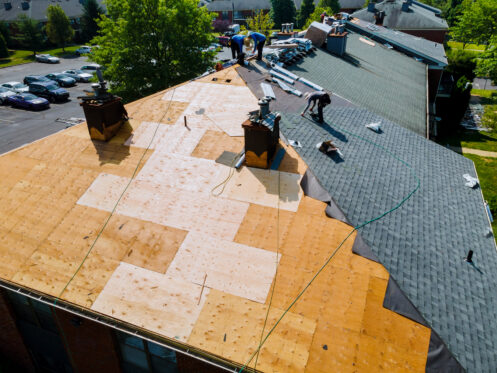
When you think about your roof, you probably picture the shingles, tiles, or metal panels that are visible from the street. These components are your home’s first line of defense, but the roof decking beneath them is equally important. Across the Pacific Northwest, from autumn rain in Seattle to snowy winter in Spokane, neglected or damaged roof decking can lead to structural issues, persistent leaks, and premature roof failure.
What Is Roof Decking?
Roof decking, or sheathing, is the layer of material, typically plywood or oriented strand board (OSB), that attaches to the trusses and rafters of your home’s frame. It creates a flat, solid surface that covers the entire structure of your roof. This continuous plane supports all the other roofing components, such as the underlayment, flashing, and shingles.
Why Roof Decking Matters
Roof decking plays a role in maintaining the health and safety of your home. A solid deck is fundamental to a long-lasting, weather-resistant roof.
- Supports shingles and underlayment
- Distributes roof loads and weight
- Adds strength to the entire roof frame
- Offers a secondary barrier against moisture
What Causes Roof Decking to Deteriorate?
Even though roof decking isn’t in direct sunlight and rain, it’s still vulnerable to damage. Several factors, often working in combination, can cause the wood to weaken, rot, and fail over time.
Roof Leaks
The most common cause of decking damage is long-term exposure to moisture from a roof leak. A missing shingle, cracked flashing, or failed sealant can allow water to seep underneath your roofing materials and saturate the wood decking. Because these leaks are often slow and hidden, the damage can progress for months or even years before it becomes obvious inside your home. This constant moisture can lead to wood rot, delamination of plywood, and a spongy, weakened structure.
Poor Roof Ventilation
Ventilation is crucial for a healthy roof, especially in the humid climate of the Pacific Northwest. An improperly ventilated attic traps heat and moisture that rises from the living spaces below. In the winter, this warm, moist air condenses on the cold underside of the roof decking, leading to rot from the inside out. In the summer, trapped heat can bake the decking and shingles, accelerating their aging process and causing the wood to become brittle.
Aging Roofing Materials
As your roof ages, its protective layers break down. Worn, cracked, or curling shingles can no longer effectively shed water, creating pathways for moisture to reach the decking. Similarly, deteriorating underlayment and flashing around chimneys, vents, and valleys can fail, leaving the decking open to water intrusion. An old roof is the single biggest risk factor for compromised roof decking.
Pacific Northwest Weather
Our regional weather poses a significant challenge to every component of a roofing system. The frequent rainfall in western Washington and Oregon means roofs are constantly battling moisture. In areas like Coeur d’Alene and Eastern Washington, heavy snow and ice can create ice dams, which force water up under the shingles. Heavy seasonal wind-driven rain can also push moisture into tiny crevices, where it eventually finds its way to the decking.
Warning Signs of Damaged Roof Decking
Because roof decking isn’t visible, identifying problems requires a keen eye. If you notice any of the following, it’s time to call a professional for an inspection.
- Visibly sagging or uneven roofline
- Soft or spongy spots on the roof
- Persistent and hard-to-find roof leaks
- Water stains on interior ceilings or walls
- Mold or mildew smell in the attic
- Daylight visible through attic roof boards
The Hidden Risks of Ignoring Roof Decking Problems
Postponing repairs for damaged roof decking can turn a manageable issue into an expensive problem. The risks extend beyond just your roof and can impact the safety and value of your entire home.
Some risks include structural weakening, which could lead to a roof collapse under a heavy snow load. Trapped moisture may lead to mold and mildew growth, compromising your home’s indoor air quality. Water that penetrates the decking can damage insulation, drywall, and even electrical systems. Ultimately, this neglect can reduce your roof’s lifespan, making future repairs or replacement more expensive.
When Roof Decking Needs Repair vs. Replacement
When our team inspects a roof, we carefully evaluate the condition of the decking to determine the best course of action. The decision to repair or replace depends on the extent and nature of the damage.
If the damage is in a small area, perhaps around a single leak source, it may be possible to cut out the rotted section and patch it with new sheathing. However, if the rot is widespread, the wood is spongy and soft across multiple sections, or the structural integrity of the boards is weak, a full replacement of the decking is often necessary to ensure a safe, long-lasting result.
How Roof Inspections Help Protect Your Decking
The best way to protect your roof decking is through proactive, professional inspections. An experienced roofer knows how to spot the subtle, early signs of trouble that an untrained eye would miss. During an inspection, our team checks for signs of leaks, assesses attic ventilation, and looks for any hidden structural concerns.
By identifying issues like poor ventilation or minor leaks early, we can recommend preventative maintenance to correct the problem before it causes significant damage to your decking. An annual inspection is a small investment that can save you from major structural repairs down the road.
Why Professional Roof Replacement Includes Decking Evaluation
A quality roof replacement is more than just installing new shingles. At Jimmy's Roofing, we believe a new roof is only as good as its foundation. That’s why our process for every roof replacement always includes a thorough inspection of the roof decking after we remove the old materials.
Installing a beautiful new roofing system over soft, rotten, or damaged decking would be a disservice to our clients and would lead to premature failure. We ensure your new roof has a solid, stable, and code-compliant foundation to protect your home.
Protect Your Roof From the Inside Out With Jimmy's Roofing
Your roof decking is the unsung hero of your home’s protective system. Keeping it strong, dry, and secure helps extend your roof’s longevity and protect your property. Since 2001, our family-owned business has provided top-quality roofing solutions that stand up to the unique challenges of our climate.
Don’t wait for a small leak to become a major structural problem. We encourage homeowners in Washington, Oregon, and Idaho to protect their investment by scheduling a professional evaluation with our team. Contact Jimmy's Roofing today to book a comprehensive roof inspection and identify any hidden decking issues before they become major repairs.





 #thejimmysWAY